OK Win Games: Exploring Different Gaming Categories
Online gaming has become a broad entertainment space where players can choose from many different types of experiences. Some people enjoy fast-paced action, while others prefer strategy, puzzles, sports, or games based on chance. With so many options available, understanding the different gaming categories can make it easier to find something that matches your interests.
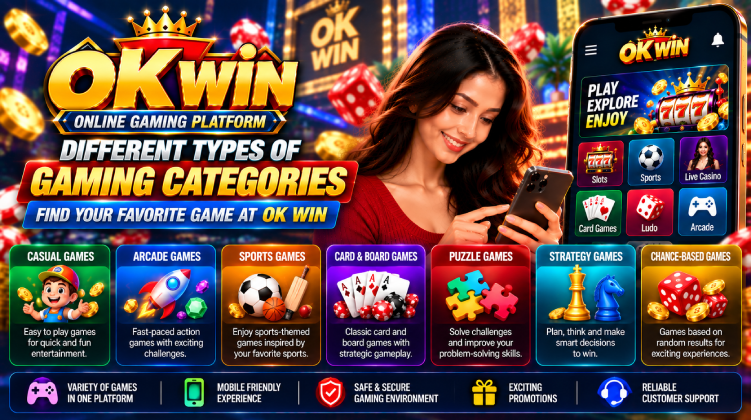
OK Win is associated with an online gaming environment that offers different types of games in one place. Rather than focusing on only one style, platforms in this category may provide a mixture of entertainment formats. Each category has its own features, pace, and level of interaction, giving players different ways to spend their free time.
Understanding Online Gaming Categories
Not every game appeals to the same type of player. A person who enjoys making strategic decisions may not have the same interests as someone who prefers quick rounds or sports-based gameplay.
Gaming categories help organize these different experiences. Common categories include:
- Casual games
- Arcade-style games
- Sports games
- Card and board games
- Puzzle games
- Strategy games
- Chance-based games
Knowing what each category offers can help players make more informed entertainment choices.
Casual Games for Quick Entertainment
Casual games are designed to be easy to understand and convenient to play. They often have simple controls and straightforward objectives, making them suitable for short gaming sessions.
For example, a player might have only a few minutes available during a break. A casual game can provide entertainment without requiring a long commitment or extensive knowledge of complicated rules.
Why Casual Games Are Popular
The main attraction is simplicity. Players can usually understand the basic objective quickly and begin playing without spending a lot of time learning complicated mechanics.
Casual games can also appeal to people who do not consider themselves experienced gamers. Their accessible design makes them a common part of modern online gaming platforms.
Arcade-Style Games
Arcade games are traditionally associated with quick action, simple objectives, and repeated attempts to improve performance. Modern online versions often maintain these characteristics while adding different themes and visual designs.
Players may need to react quickly, achieve a particular target, or complete a short sequence of challenges. The straightforward structure can make arcade-style games easy to pick up.
Improving Through Practice
One interesting feature of arcade gameplay is the opportunity to improve through repetition. A player may become more familiar with the controls and gradually develop better timing or decision-making skills.
This type of game can be appealing to people who enjoy short challenges and measurable progress.
Sports-Based Gaming
Sports games bring familiar athletic activities into a digital environment. Depending on the platform, these may include games inspired by football, basketball, racing, cricket, or other popular sports.
Sports-themed gaming can appeal to fans who already enjoy following real-world competitions. It provides a different way to interact with familiar sports concepts.
Real Sports vs. Sports Games
It is important to understand that digital sports games are entertainment products and should not be confused with actual sporting events. A game may simulate certain aspects of a sport, but its results are determined by the game’s own rules and systems.
For players, the appeal often comes from the theme, competition, and interactive experience rather than from replicating every detail of real-world sport.
Card and Board Games
Card and board games have existed for generations, and many traditional formats have moved into digital environments. Online versions can make familiar games accessible from computers or mobile devices.
These games can involve memory, planning, probability, or decision-making. The exact experience depends on the individual game and its rules.
Learning the Rules First
Before playing a card or board game, it is useful to understand:
- The objective of the game
- How turns or rounds work
- What actions are allowed
- How the final result is determined
- Whether any entry cost or financial risk is involved
Taking a few minutes to understand the rules can prevent confusion and make the experience more enjoyable.
Puzzle and Skill-Based Games
Puzzle games focus on problem-solving and logical thinking. They can range from simple matching challenges to more complex tasks involving patterns, numbers, memory, or planning.
These games are often suitable for players who enjoy mental challenges rather than fast action.
Examples of Puzzle Challenges
A puzzle might ask players to:
- Find matching objects
- Identify patterns
- Complete a sequence
- Solve a logic problem
- Reach a target using limited moves
The satisfaction often comes from discovering the solution rather than simply completing a game quickly.
Strategy Games
Strategy games require players to think about decisions and possible outcomes. Instead of relying entirely on quick reactions, players may need to consider several options before choosing an action.
For example, a strategy game could require someone to manage limited resources, plan several steps ahead, or decide when to take a particular action.
Why Strategy Requires Patience
Good strategic decisions are not always obvious. Players may need to compare alternatives and consider what could happen next.
This makes strategy games attractive to people who enjoy planning and analyzing different possibilities.
Chance-Based Games and Responsible Play
Some online gaming categories are based substantially on chance. In these games, the outcome may depend on random results rather than a player’s ability or strategy.
This distinction is important because skill and chance are not the same thing. A player may make careful decisions, but that does not guarantee a particular outcome in a chance-based game.
If a game involves real money, players should pay particular attention to the applicable laws, age requirements, platform rules, and financial risks. It is also important to avoid spending money that is needed for essential expenses.
Set Clear Limits
Responsible participation can include setting limits before starting. For example, a player can decide how much time and money, if any, they are comfortable using for entertainment.
Useful habits include:
- Treating gaming as entertainment rather than income
- Setting a fixed spending limit
- Avoiding attempts to recover previous losses
- Taking regular breaks
- Stopping when the activity is no longer enjoyable
These habits can help keep gaming within a manageable entertainment budget.
Choosing the Right Gaming Category
There is no single gaming category that suits everyone. The best choice depends on what a person expects from the experience.
Someone looking for quick entertainment may prefer casual or arcade games. A sports fan may naturally gravitate toward sports-themed games, while someone who enjoys solving problems might prefer puzzles or strategy.
Before choosing a game, consider:
- Time available: Some games work well for short sessions, while others require more attention.
- Personal interests: Choose themes and formats that you genuinely enjoy.
- Rules: Understand how the game works before participating.
- Cost: Check whether playing requires payment or involves financial risk.
- Safety: Use reputable platforms and protect personal account information.
Final Thoughts
The world of online gaming includes far more than one type of experience. From casual and arcade games to sports, puzzles, strategy, cards, and chance-based formats, different categories offer different forms of entertainment.
OK Win represents the kind of online gaming environment where players may encounter multiple gaming formats in one place. Understanding the differences between these categories can help users choose activities that fit their interests, available time, and comfort level.